
 It’s the season of standardized testing, and at The Village Tutors our expert team understands how stressful this can be for students…and their families. To help alleviate some stress and provide helpful guidance, we’ve compiled our top tips for test taking and preparation.
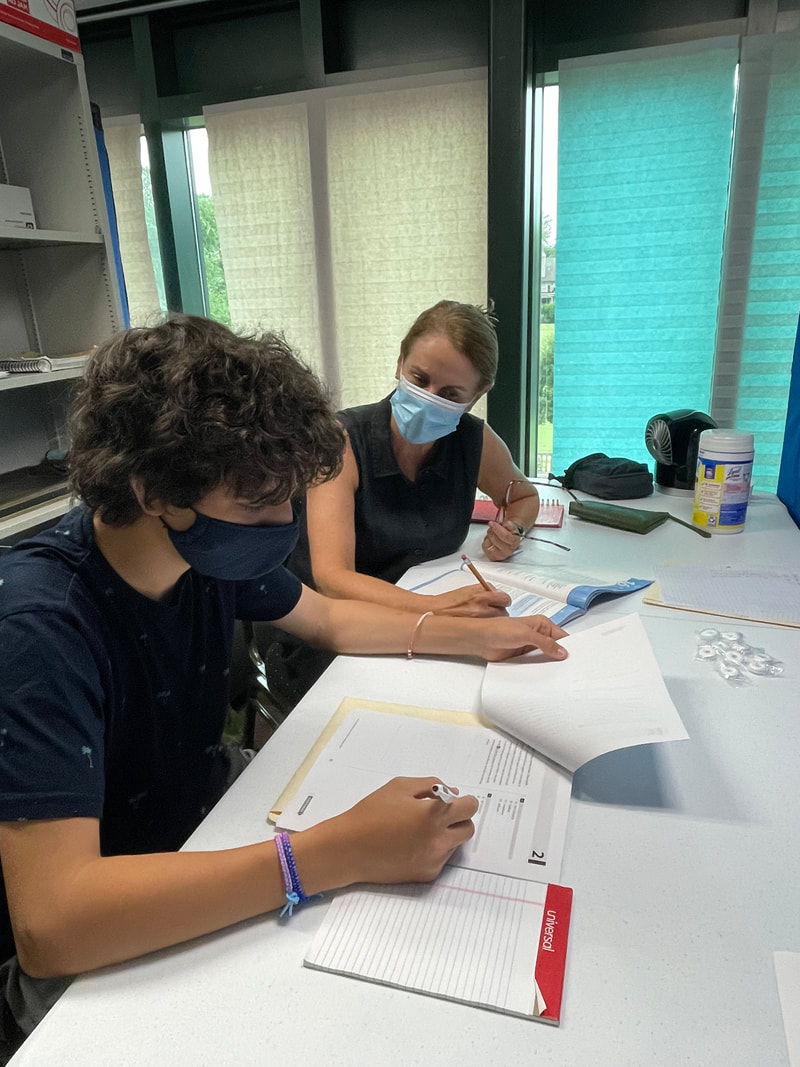
Emphasize Time Management Both the SAT and ACT are timed exams, so diligence with time is essential. One way to practice time management – and strengthen it as a necessary skill – is to have your student become familiar with each section of the test and its allotted time. Once they have this information, encourage them to complete practice work within these timeframes. For example, the English section of the ACT allows 45 minutes for 75 questions. This equates to roughly 36 seconds for each question. With this knowledge, your student can time their test prep to see how long they average per question. If it is longer than 36 seconds, then there is room to improve their speed in order to complete all questions on test day. Focus on Focusing It may sound obvious, but we know that there are so many distractions competing for our students’ time! From social media to texting to binge watching a favorite show, there are a lot of activities that can take our students away from studying. So how can we help tune out this noise? Encourage your student to study in an environment that most mirrors the setting they will experience on test day. Make sure the area is quiet and free from distractions, but still includes a clock for time management, so that they can focus on their practice questions and tests. Practice Testing Strategies When it comes to test preparation, there are many strategies that can be employed to encourage efficiency and accuracy in answers. Our expert tutors cover such strategies in detail during our test prep sessions, and we customize our sessions based on each student’s unique needs and learning styles. For standardized tests like the SAT and ACT, common testing strategies include working questions out of order, seeking to find the wrong answers first, and tailoring strategies to each specific section of the test. What if you have a younger student, who isn’t at the standardized testing stage yet? There are still testing strategies to practice, many of which can be encouraged at home. For example, our tutor Alex Laws, who works with younger students on ELA/Reading testing strategies says, “I like to teach my students to be active readers, always. We practice previewing the questions and answer selections before reading, then circling key words and highlighting evidence that supports their answer.” This is excellent advice for younger students. If you and your student are seeking additional test prep support, reach out to our team for help. We are ready and excited to assist you, and our test prep services never include contracts. We offer test prep support both in-person and online, so your student can connect with a tutor in an environment that is best for them. Contact us today for information and registration details. We look forward to supporting your student and family!  With a few weeks of school under most of our students’ belts, we’re finding that there is still quite a bit of transition during this ongoing pandemic life. It is difficult for both students and parents to navigate, as there are unprecedented choices that both groups are faced with every day. To help support your students, our team of experts has put together a few tips and tricks to help manage this transition and set everyone up for a successful school year.
|




| Maura Abernethy Michael Baron Beth Bean Cindy Charters Emily Fister Keith Friedman Haley Garvin Sarah Gonzalez Camille Harris Liz Kenna Pam Keseric Laurie Koshgarian | Susan Kroese Sarah Kroese Lynn Lach Lynn Lanese Alex Laws Lisa Lindt Cynthia Mapel Marcy McKay Regina Melbourne Eileen Norton Nancy Parkinson Judy Ryan | Loren Shinn Jill Suter Bill Tanguay Rob Vogt Kate Vogts Michelle Vranicar MJ Westlund Paula Whitelaw Ann Wilson Matt Wolszon Maureen O’Rourke-Wygonowski |

Summer is upon us, and for new juniors and seniors this means college selection is right around the corner. The summer months are a great time for students to look at colleges, research their options and even start visiting campuses! With so much information available, though, the college selection process can be overwhelming for both students and parents.
How can you best support your student as they navigate deciding which college is right for them? Here are a few of our tips to help you get started…
Does the college match your student academically?
When considering college options, it’s important to look at the programs and curriculums as well as the rigor of the institutions. For example, if your student is really interested in biology – but is considering a school known for its journalism program – it may be worth evaluating if there are other options better aligned to their interests.
Similarly, students should consider the rigor and pace of the colleges they are researching. College is an exciting time to be challenged and pushed personally and academically, but you definitely don’t want your student getting into a situation that is overly demanding or stressful for them. On the other hand, selecting a school that is less rigorous than your student’s potential could prove to be too easy, or potentially boring, as a college experience. Finding the healthy balance is critical to overall success and enjoyment.
Is the college affordable for your family?
While many students take on some type of debt when attending college, there may come a point where too much debt does not make sense. If an excessive loan will negatively impact your student or your family financially down the road, it’s worth considering if that college really is the best choice.
Fortunately, there are many options for students to help offset the cost of school, including grants, scholarships and work-study programs. As a part of your student’s research, encourage them to look into what financial options they qualify for and can reasonably pursue. You can then use this information to understand what colleges realistically make sense for your student and your family.
Will the college help your student achieve their goals?
It may seem obvious in the process, but when considering schools, it’s first and foremost important to ensure that they have the degree program your student is interested in pursuing. Even if your student isn’t sure of the path they’d like to take, exploring various options that colleges offer will help to determine if a school has what your student may be interested in, or if it’s not the right fit.
Having a general idea of interest – and finding colleges that match that interest – is an important factor when determining if a college is right for your student. This also presents a great opportunity to visit campuses and talk with current students to understand why they chose the school. They may have been in a similar situation as your student and can help to shed light by sharing their experience.
Does the “feel” of the college feel right to your student?
At the end of the day, a college is going to be your student’s new home for the next several years. This is incredibly important, and the general “feel” of the school cannot be overlooked. There is a lot that can go into determining “feel” – including geographic location, size of the school, social climate, extracurricular activity options, etc. and your student most likely has other factors that will go into this equation.
As you are researching and visiting schools together, emphasize the importance of “feel” for your student so they don’t get too caught up in the other elements of consideration. Even if a school checks every single box except “feel”, it’s important to remind your student that they need to feel welcome and at home. If they do not feel that, then the school may not be right for them.
--
Researching and selecting a college is an exciting time for your student and your family. At The Village Tutors, we offer College Consulting to provide expert guidance through this process. Learn more here and reach out to our team for assistance with these important decisions.
How can you best support your student as they navigate deciding which college is right for them? Here are a few of our tips to help you get started…
Does the college match your student academically?
When considering college options, it’s important to look at the programs and curriculums as well as the rigor of the institutions. For example, if your student is really interested in biology – but is considering a school known for its journalism program – it may be worth evaluating if there are other options better aligned to their interests.
Similarly, students should consider the rigor and pace of the colleges they are researching. College is an exciting time to be challenged and pushed personally and academically, but you definitely don’t want your student getting into a situation that is overly demanding or stressful for them. On the other hand, selecting a school that is less rigorous than your student’s potential could prove to be too easy, or potentially boring, as a college experience. Finding the healthy balance is critical to overall success and enjoyment.
Is the college affordable for your family?
While many students take on some type of debt when attending college, there may come a point where too much debt does not make sense. If an excessive loan will negatively impact your student or your family financially down the road, it’s worth considering if that college really is the best choice.
Fortunately, there are many options for students to help offset the cost of school, including grants, scholarships and work-study programs. As a part of your student’s research, encourage them to look into what financial options they qualify for and can reasonably pursue. You can then use this information to understand what colleges realistically make sense for your student and your family.
Will the college help your student achieve their goals?
It may seem obvious in the process, but when considering schools, it’s first and foremost important to ensure that they have the degree program your student is interested in pursuing. Even if your student isn’t sure of the path they’d like to take, exploring various options that colleges offer will help to determine if a school has what your student may be interested in, or if it’s not the right fit.
Having a general idea of interest – and finding colleges that match that interest – is an important factor when determining if a college is right for your student. This also presents a great opportunity to visit campuses and talk with current students to understand why they chose the school. They may have been in a similar situation as your student and can help to shed light by sharing their experience.
Does the “feel” of the college feel right to your student?
At the end of the day, a college is going to be your student’s new home for the next several years. This is incredibly important, and the general “feel” of the school cannot be overlooked. There is a lot that can go into determining “feel” – including geographic location, size of the school, social climate, extracurricular activity options, etc. and your student most likely has other factors that will go into this equation.
As you are researching and visiting schools together, emphasize the importance of “feel” for your student so they don’t get too caught up in the other elements of consideration. Even if a school checks every single box except “feel”, it’s important to remind your student that they need to feel welcome and at home. If they do not feel that, then the school may not be right for them.
--
Researching and selecting a college is an exciting time for your student and your family. At The Village Tutors, we offer College Consulting to provide expert guidance through this process. Learn more here and reach out to our team for assistance with these important decisions.

By: Ann Wilson, The Village Tutors
Depending on your student’s year in school, it’s either “wait for college decisions” season or “think about college applications” season. Both are super exciting and super stressful!
For this year’s seniors, there have been more delays than usual as schools try to sift through thousands of applicants, many of whom do not have standardized test scores. The lesson learned this year is that a student can never have too many safety schools, and, thankfully, there are actually a few schools still accepting applications. Other kids are starting to consider gap years if they cannot get into their school of choice this time around. Hopefully, everyone gets an acceptance they feel good about, but, gosh, waiting is so tough.
Seniors are also starting to think about scholarship applications, which often require more essays and a resume. Some kids are putting together portfolios, videos of sports highlights, and preparing auditions. Phew!
For juniors, the reality might have hit that they will soon be applying to colleges themselves, and some students may be contemplating whether or not they actually want to pursue a college degree. Some juniors are avoiding having to think about these next steps, but I (we) highly encourage families to start having conversations about college plans.
And what about those standardized tests? Take them! Prepare for them! It doesn’t mean you have to submit them, but for most students, submitting them will help your application. The fact that the SAT dropped the subject tests and the optional essay portion in order ‘to reduce the burden on students’ sends the message that colleges want students to attempt to submit test scores.
As the College Consultant at TVT, I encourage students to be ready to start filling out applications and writing essays in June. It is very stressful for kids to try and do a good job on college applications at the same time that they are trying to do well in school. If kids return to school in the fall with all their applications done and essays written, all they have to do in September is request their teacher and counselor recommendations and send their transcripts. At some of our big area high schools, requesting these supplementary materials is a very detailed and stressful process in itself, so the less there is to do in September, the better.
For families that have spring breaks, hopefully you can visit some college campuses. Use time away from school to talk about majors, types of post high school options for kids who might not be college-bound, and the types of schools where kids feel they might fit.
When I work with students on their college applications, we discuss majors and identify what they enjoy and what they are good at. We also discuss types of schools (big, small, medium, rural, urban, etc), but what matters most is “fit” -- a sense that each student will feel at home on the campus, surrounded by their kind of people, that they’re at a place where they can thrive on their own.
Once a list of colleges has been made (to include safety, reach, and ‘right there’ choices) we work on those essays. This is my favorite part of college consulting -- I love creative writing and helping kids find their voice!
Our college consulting services are offered a la carte: some students want help with the whole process, while others only use consulting to write the essays, to fill out the applications, or delve into how they can best use their talents and interests. Whatever your family needs, don’t hesitate to reach out. You can make the path to college more exciting and less stressful by starting the process early!

This past school year has been one of many challenges for students, teachers, and families. From navigating remote learning, practicing distancing in schools, and relying on technology in new ways, it’s been quite the year.
As summer break rapidly approaches, now is the critical time to keep students motivated to finish the year focused and optimistic. How can you best support your student during these last weeks of school? We have some ideas…
Lead with Empathy
Since this has been an unprecedented school year, it’s unsurprising that students may be feeling overwhelmed and tired. While it’s important to continue to maintain due dates and expectations – especially for homework, projects, tests, etc. – remember to lead with a spirit of understanding. For students struggling to meet due dates, or resisting completing homework at home, take the time to talk with them about what’s going on. It could be the stresses of finishing the school year, the ongoing pandemic, or something else entirely. Taking the time to understand where they are – and what they need – is a critical way to boost motivation through the rest of the school year.
Change the Scenery
As the weather continues to warm up, now is a great time to take learning outside! For remote learners, encourage students to complete tasks outdoors – especially those that don’t require WiFi. Something simple like sitting on the back porch or spreading a blanket on the yard to complete work can help re-energize students. Similarly, for students learning in-person at schools, teachers can take advantage of nice days to bring lessons outdoors. This change in scenery can help students better focus on topics, and even complete work more quickly and effectively. A change from the everyday routine can make a big difference and shouldn’t be overlooked.
Celebrate!
Now more than ever, celebrating the big and small wins is so important! At home, celebrate when your students complete a difficult task, finish a test, or turn in a large project. Taking the time to recognize and acknowledge their accomplishments is a great way to keep them motivated. Remember that celebrating the small wins is just as important as the big! For in-person learners, teachers can consider a “Wins Wall” or something similar where students can be recognized and share their accomplishments. Celebrating large and small wins is very significant for students, and will help them stay on track for finishing the school year positively.
Provide More Support When Needed
If your student is struggling, remember that there is more support available – outside of parents and teachers. Knowing how to “Take N.O.T.E.” and observe whether additional support is needed is critical to your student’s academic success. Giving them the help and support they need, even if they don’t know to ask for it, is the ultimate tool in keeping them motivated and on track in their academic journey.
As summer break rapidly approaches, now is the critical time to keep students motivated to finish the year focused and optimistic. How can you best support your student during these last weeks of school? We have some ideas…
Lead with Empathy
Since this has been an unprecedented school year, it’s unsurprising that students may be feeling overwhelmed and tired. While it’s important to continue to maintain due dates and expectations – especially for homework, projects, tests, etc. – remember to lead with a spirit of understanding. For students struggling to meet due dates, or resisting completing homework at home, take the time to talk with them about what’s going on. It could be the stresses of finishing the school year, the ongoing pandemic, or something else entirely. Taking the time to understand where they are – and what they need – is a critical way to boost motivation through the rest of the school year.
Change the Scenery
As the weather continues to warm up, now is a great time to take learning outside! For remote learners, encourage students to complete tasks outdoors – especially those that don’t require WiFi. Something simple like sitting on the back porch or spreading a blanket on the yard to complete work can help re-energize students. Similarly, for students learning in-person at schools, teachers can take advantage of nice days to bring lessons outdoors. This change in scenery can help students better focus on topics, and even complete work more quickly and effectively. A change from the everyday routine can make a big difference and shouldn’t be overlooked.
Celebrate!
Now more than ever, celebrating the big and small wins is so important! At home, celebrate when your students complete a difficult task, finish a test, or turn in a large project. Taking the time to recognize and acknowledge their accomplishments is a great way to keep them motivated. Remember that celebrating the small wins is just as important as the big! For in-person learners, teachers can consider a “Wins Wall” or something similar where students can be recognized and share their accomplishments. Celebrating large and small wins is very significant for students, and will help them stay on track for finishing the school year positively.
Provide More Support When Needed
If your student is struggling, remember that there is more support available – outside of parents and teachers. Knowing how to “Take N.O.T.E.” and observe whether additional support is needed is critical to your student’s academic success. Giving them the help and support they need, even if they don’t know to ask for it, is the ultimate tool in keeping them motivated and on track in their academic journey.